Materion

Site Search
  • Entire Site
  • Entire Site
  • Products
  • Resource Center

Analytical Capability

Analytical Capability

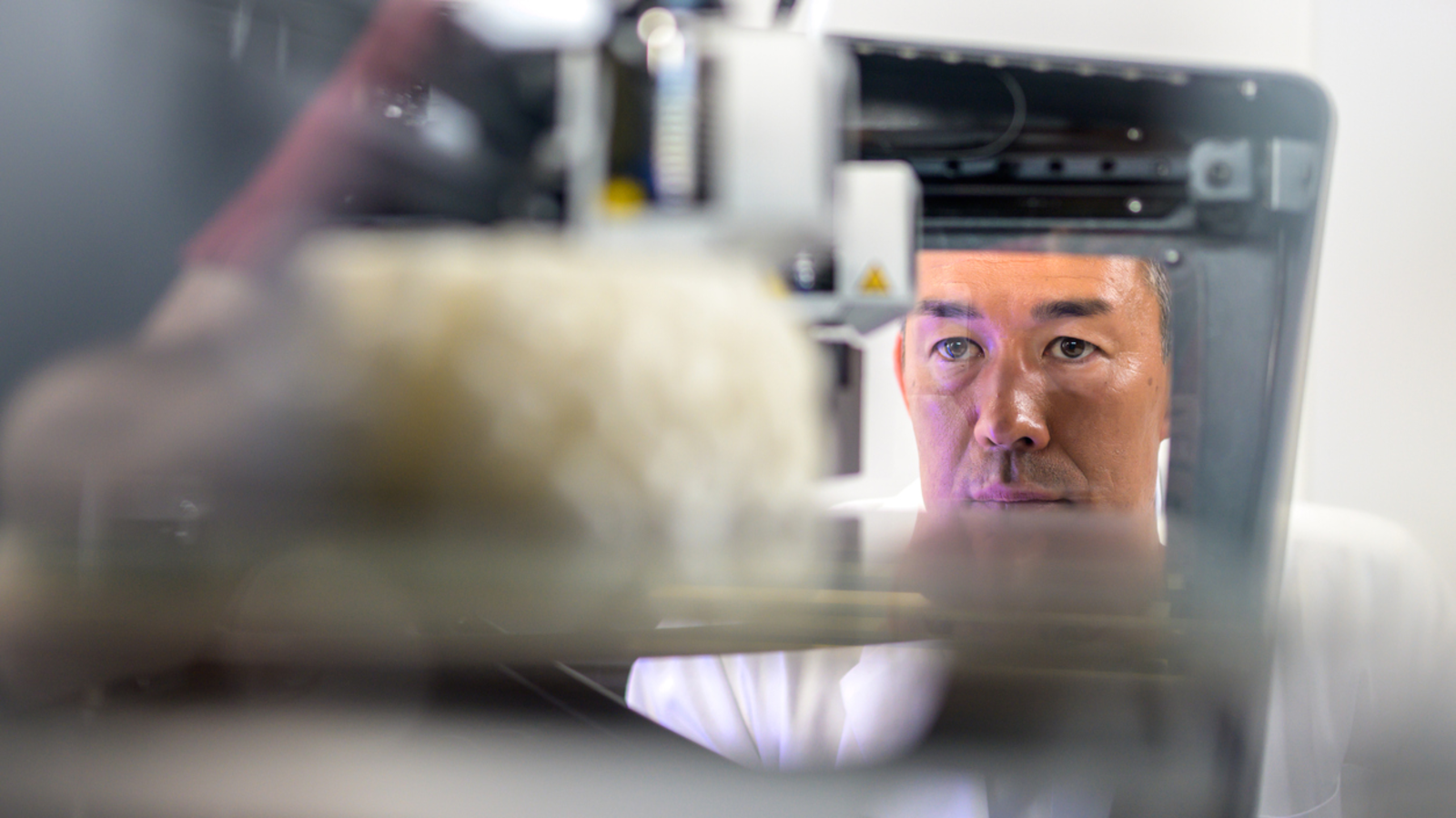
The extensive analytical capabilities Materion Microelectronics & Services position our process engineers, R&D team and our customers as the leaders in delivering materials with superior purity and consistency. Fully staffed internal analytical lab capabilities develop tangible matrices that deliver the best products with dependable performance, accurate compositions and best production yields in the industry today. These analytical services also complement Williams' valued added services; such as shield cleaning, materials recycling and metal recovery; and have resulted in global recognition for commitment to quality, trust and best value returned.

GDMS at Materion Microelectronics & Services

Materion Microelectronics & Services has the capability to perform chemical analysis via Glow Discharge Mass Spectrometry (GDMS), which enables the analysis and reporting of elemental impurities to very low levels of detection. The GDMS allows us to maintain the highest standards for incoming raw material and outgoing product per customer specifications.

GDMS is the state-of-the-art analytical technique for the elemental analysis of inorganic materials. It is the most comprehensive and sensitive technique available for the analysis of solids.

The technique is widely used for the quantitative analysis of high purity materials including the determination of minor and trace elements in metal alloys as well as the determination of dopants and impurities at ultra-trace levels in pure metals, semiconductor and superconducting materials.

Other applications include the analysis of oxide and non-oxide ceramics, oxide powders and other non-conducting inorganic matrices.

Advantages over other analytical techniques include total elemental coverage, from lithium through uranium on the periodic table, at levels from below one part-per-billion through several percent, at high precision and accuracy.

GDMS Technology Features

GDMS involves sputtering a pre-cleaned flat or pin sample in a low-pressure argon plasma (glow discharge). The glow discharge sputters atoms from the surface of the sample and the atoms are subsequently ionized in the argon plasma. The ionized atoms are extracted into a high-resolution mass analyzer, in which they are separated and measured based on their characteristic mass-to-charge ratio.

  • Full elemental analysis capability. Detection limits for most elements are below one part-per-billion and, for some elements are as low as 10 parts-per-trillion. This is better than any other commercially available technique.
  • Minimal sample preparation – Solid samples in the form of a pin or disk are analyzed directly without the need for acid dissolution. This greatly reduces the potential for sample contamination.
  • Capable of performing quantitative elemental depth profile analysis of plated, layered or surface treated materials.

Current capabilities are: GDMS, ICP-MS,  LECO (C,O,N,H), SEM/EDS, AUGER, ESCA, DSC-DTA, Image Analysis, Microhardness, Tensile Testing, ICP-OES, DC-ARC, Fire Assay, and Corrosion testing via Salt Spray, XRF (Plating Thickness Evaluation, Fire Assay, Tensile Testing, Surface Analysis),  Metallography, Hardness (Rockwell & Superficial)

Analytical Capability Is Offered By: